

Surveillance (or operative surveillance) is a conspiratorial close following with the purpose of gathering intel on someone (“filing them”): the direct and detailed observation of their behaviour, conduct and/ or actions (which in most cases are subversive and conspiratorial). The task is to establish their contacts, to identify the people with whom the suspect links and to photograph moments and situations considered relevant by the “operative” agents for the ongoing investigation.
The participants will have a highly authentic experience, taking part in a surveillance (operative surveillance) - tracking a person, a possible member of a terrorist organization, sought by the North Atlantic Information Agencies. They will have to gather relevant intel to protect the general population. The difficulty level of the operation is even higher, as there are reasonable suspicions that the terrorist organization has backing from a state outside the North Atlantic collective security system, which desires to destabilize the southern flank of the North Atlantic Treaty Organization (NATO).
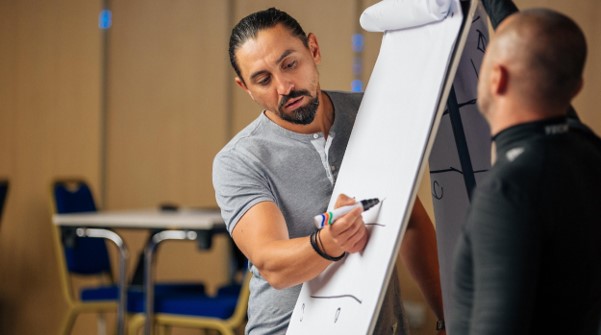
The experience begins with a briefing from a specialist experienced in the field. Then the participants will each be introduced into the techniques and tactics specific to the operational surveillance activities, so that they are able to locate the "subject“ and monitor their activities and behaviour.
The challenges that the participants will face are uncommon and diverse. Although the secret lies in teamwork, the individual may experience discomfort because of the lack of a colleague’s proximity in key moments, feedback received, or the mere absence of encouragement, which may cause doubting their own decisions.
Any individual mistake can compromise the work of the entire team, unravel the entire operation and permanently endanger the mission's coordinates. The whole activity is carried out using restrictive channels of communication, in an unpredictable operational environment, marked by informational volatility (lack of information alternating with excessive and redundant information that is quickly losing relevance).
Adaptability, rapid analysis of information, comprehension and instant adaptation to the environment and its changes, anticipation of the actions of the other teammates, operational courage can lead to the success of the operative mission, but they cannot guarantee it
Obtained results:
•Participants are aware of the importance of personal contribution to achieving team goals;
•Awareness of the C2 role (command and control) in achieving the goals and the fact that the integrity, reliability and performance of the C2 system is not the responsibility of the leader or leadership, but of each member of a team;
•Developing team interdependence;
•Developing communication;
•Awareness of the need to collaborate and agree with your team members;
•Awareness of the causal relationship between strategy and tactics (operational);
•Developing decisional flexibility and awareness of the importance of this in relation to the development of operational autonomy;
•Awareness and understanding of the role of leadership and followership (both in the context of fellowship) in increasing the reliability of team work;
•Increasing the energy level and self-confidence of team members.